A serum bottle has one big job: protect a delicate, expensive formula while making it easy to use. Serums are packed with active ingredients like vitamin C and retinol that break down when they meet air and light, so the bottle is part of whether the product works. The right choice keeps the formula fresh from the first drop to the last.
The serum category is booming, too. The facial serum market is projected to reach $10.51 billion by 2030, growing at a CAGR of 7.5%, according to Mordor Intelligence. That growth means more brands are launching serums and more need the right bottle to stand out and perform.
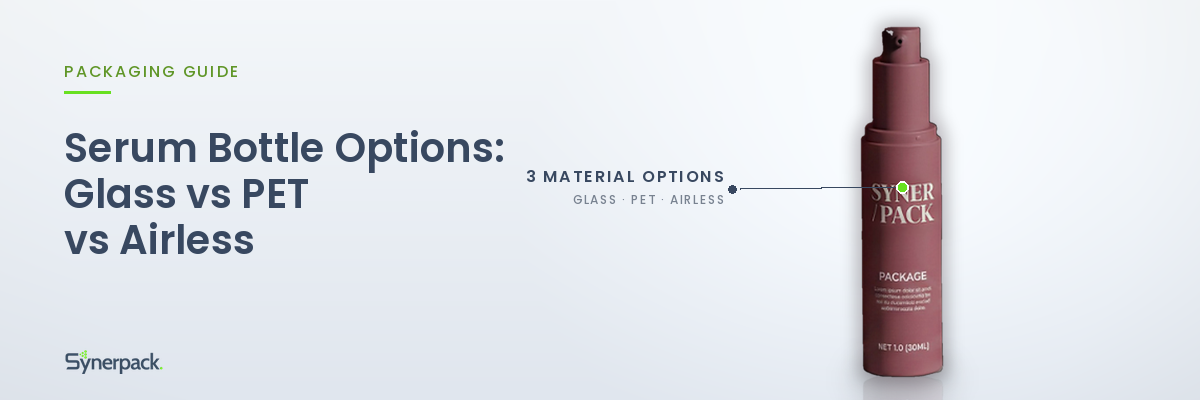
So which serum bottle suits your formula? This guide compares the three main options, glass, PET, and airless, on protection, feel, cost, and best use, so you can pick the right fit for your brand.
Why the Serum Bottle Choice Matters
Serums are the most sensitive products in most skincare lines. Their active ingredients are powerful but fragile, and the wrong bottle can let them break down before the customer finishes the bottle.
Three things make the serum bottle decision different from other packaging:
- Air exposure: Many serum actives oxidize when they meet air, which weakens the formula over time.
- Light exposure: Ingredients like vitamin C and retinol degrade in light, so the bottle may need to block it.
- Precise dosing: Serums are using a few drops at a time, so the bottle needs controlled, clean dispensing.
Get the bottle right and the formula stays effective. Get it wrong and even a great serum can disappoint. That is why glass, PET, and airless choice deserve real thought.
Glass Serum Bottles
Glass is the classic choice for premium serums, and for good reason. It feels weighty and luxurious, and it does not react with the formula inside.
Glass serum bottles protect actives well because the material is fully inert, so nothing leaches into the product. Amber or violet glass adds light protection, which suits vitamin C and other light-sensitive ingredients. The main trade-offs are weight and the risk of breakage, plus a higher shipping cost.
Most glass serum bottles pair with a dropper, which gives precise dosing and a premium feel. For luxury and clean-beauty lines, glass remains a top pick.
PET Serum Bottles
PET is a practical, budget-friendly option. It is a clear, lightweight plastic that looks clean and resists shattering, which makes it great for everyday and travel-friendly serums.
PET serum bottles are far lighter than glass, so they cost less to ship and survive drops better. Good PET is stable and does not easily leach, though it offers less light protection than amber glass unless you add a tint or coating. For water-based serums and mass-market lines, PET is often the smart call.
Like glass, PET serum bottles can pair with a dropper for controlled dosing. The glass vs plastic serum bottles decision often comes down to whether you want a premium feel or a lighter, lower-cost option.
Airless Serum Bottles
Airlessness is the best choice for protection. These bottles use a piston or pouch system that keeps air out completely, so the formula barely oxidizes at all.
Airless serum bottles shine with the most sensitive actives. Because no air flows back in, ingredients like vitamin C, retinol, and peptides stay stable for a long time. They also dispense a clean, measured dose and use nearly all the product, with little waste at the bottom. The trade-off is cost, since airless serum bottle packaging runs more than a simple glass or PET bottle.
For active-heavy or premium serums where freshness is the priority, custom airless bottles for serum are hard to beat. Many high-performance brands choose them for exactly that reason.
Glass vs PET vs Airless: A Quick Comparison
To make the choice easier, here is how the three options stack up on what matters most for a serum.
| Factor | Glass | PET | Airless |
| Formula protection | Good, inert; amber blocks light | Moderate, less light protection | Best, seals out air completely |
| Feel | Heavy, premium, luxurious | Light, clean, practical | Sleek, modern, premium |
| Cost | Higher | Most affordable | Highest |
| Best for | Luxury and clean-beauty serums | Every day and travel serums | Active-heavy, premium serums |
The takeaway is simple. Match the bottle to your formula and your position. Glass suits luxury, PET suits everyday value, and airless suits the most sensitive, high-performance serums. The best serum bottle packaging is the one that protects your formula and fits your brand.
What to Check Before Sourcing
Once you know which option fits, sourcing comes down to a few key checks. A reliable supplier saves you from leaks, weak droppers, and finishes that miss your brand.
Here is what to look for in cosmetic serum bottles:
- Formula compatibility: Confirm the material is cosmetic and safe with your active.
- Dropper or pump quality: Test that dosing is smooth and consistent every time.
- Seal and leak testing: The bottle should seal tightly for shipping and daily use.
- Customization: Look for color, printing, and finish options so custom serum bottles for brands match your line.
- MOQs: Check minimum order quantity. New brands want low or flexible minimums.
Always request samples and test them with your actual serum before a full run. Buying serum bottles wholesale also lowers your cost per unit as you scale. Synerpack helps skincare brands choose, customize, and source the right serum bottle from first idea to final delivery.
Conclusion
The best serum bottle depends on your formula, your customer, and your budget. Glass offers a premium, inert option; PET keeps things light and affordable, and airless gives the strongest protection for sensitive actives.
Start with how fragile your formula is, then weigh, cost, and best use. Take the time to test samples and work with a supplier you trust. Get it right, and your serum bottle protects both your formula and your brand.
Ready to find the right serum bottle for your line?
Synerpack helps skincare brands choose, customize, and source serum bottles, from glass and PET droppers to airless designs built for sensitive actives. Whether you are launching your first serum or scaling an existing range, the team can match the right fit to your formula and budget.
Frequently asked questions – FAQs
Q1. What is the best bottle for serum?
The best bottle for serum depends on the formula. Airless gives the strongest protection for sensitive actives, glass suits premium lines, and PET works every day, travel-friendly serums. Match the bottle to see how fragile your formula is.
Q2. Are glass or PET serum bottles better?
It depends on your goals. Glass serum bottles feel premium and protect the formula well, especially in amber. PET serum bottles are lighter, tougher, and more affordable. The glass vs plastic serum bottles choice comes down to feel versus cost.
Q3. Why use airless bottles for serum?
Airless serum bottles seal out air completely, so sensitive actives like vitamin C and retinol stay stable far longer. They also dispense a clean, measured dose and waste very little product, which suits premium, active-heavy serums.
Q4. What size are the serum bottles?
Most serum bottles are small, usually 15 ml to 50 ml, since serums are used for a few drops at a time. The 30 ml size is the most common for facial serums, with smaller sizes for samples and travel.
Q5. Where can brands buy serum bottles wholesale?
Most cosmetic packaging suppliers sell serum bottles wholesale, in glass, PET, and airless, with options for size, color, and branding. Buying serum bottles wholesale lowers the cost per unit, and a good supplier offers low minimums and samples.